SLOPE STABILIZATION
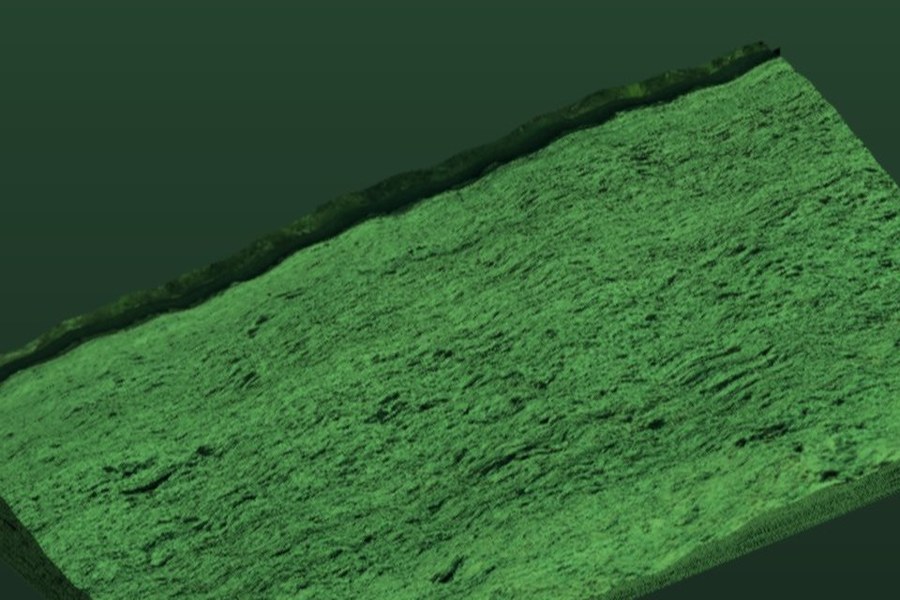
Cut and fill slopes, embankments and spoil piles. Roots and a bonded mulch mat keep the face of the slope from moving in the next storm.

DeRidder & Abbeville, LA · Southwest Louisiana.
Seed, mulch, fertilizer and tackifier sprayed on as one green slurry — erosion control and turf establishment for slopes, ditch banks, pads, shoulders and disturbed ground across SWLA.
Hydroseeding is a slurry of grass seed, wood or paper mulch, fertilizer and tackifier sprayed over prepared ground. The mulch blankets the surface and holds moisture where the seed needs it, the tackifier glues the whole mat down, and the fertilizer feeds the stand while it roots. It is one pass over ground that a spreader and a rake would take days to cover — and it works on slopes nobody wants to walk.
The mulch is dyed green, so the sprayed area goes green the moment it hits the ground. That is not the grass yet — it is a coverage check. You, the inspector, and the general contractor can all stand at the edge of a pad and see exactly what got sprayed and what got missed, with no guessing and no walking the acreage looking for bare seed.
We spray across Southwest Louisiana out of DeRidder and Abbeville — Leesville, Lake Charles, Sulphur, Jennings, Oakdale and the surrounding parishes.
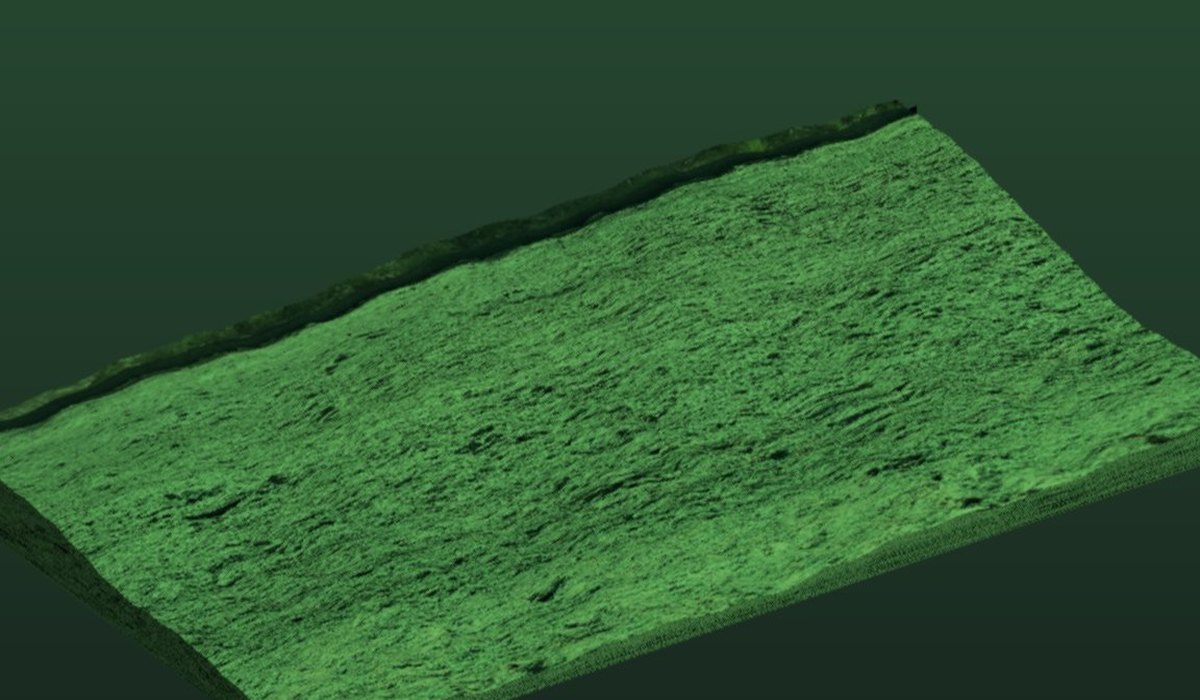
Cut and fill slopes, embankments and spoil piles. Roots and a bonded mulch mat keep the face of the slope from moving in the next storm.
Post-construction cleanup. Once the grading is final and the equipment is gone, we put ground cover back over what the job tore up.
Drainage ditches, canal banks and levee slopes across the parish. Vegetated banks shed water instead of feeding it sediment.
Shoulders, ROW strips and roadside slopes after utility, paving or drainage work. Long, narrow, awkward ground — ideal for a spray rig.
Retired pads, laydown yards and staging areas. Getting cover back on bare compacted ground stops the dust and stops the runoff.
Retention and detention basin banks, pond slopes and outfall areas — the places where a washout turns into a maintenance bill.
Pipeline corridors, trench lines, borrow areas and anywhere the topsoil got opened up. Cover it before the weather finds it.
Vegetative stabilization to help satisfy stormwater and SWPPP requirements on active and closing-out construction sites.
| Large acreage | Hydroseeding |
|---|---|
| Steep or irregular slopes | Hydroseeding |
| Ditch, levee & pond banks | Hydroseeding |
| Freshly graded bare ground | Hydroseeding |
| Long, narrow ROW strips | Hydroseeding |
| Instant finished cover | Sod |
| Traffic within days | Sod |
| Small, high-visibility lawn | Sod |
| Ground already washing today | Sod or blanket |
| Cheapest possible pass | Dry broadcast |
Four stages, and the first one decides how well the other three go. Timelines below are typical ranges — weather, soil temperature and the seed mix all move them.
Grade to final contour, pull the rock and debris, and rough up the surface. Slick, hard-tracked ground sheds seed and water. Topsoil goes back where it is needed. Prep is where most failed seedings actually fail.
Seed, wood or paper mulch, fertilizer and tackifier are metered into the tank and agitated into a consistent slurry. The mix is built for that site — sun, soil, slope, traffic and season all change what goes in.
Applied from the rig by hose or tower, worked across the whole surface for even coverage. The operator reads the green as it goes down and backs up over anything thin. Large areas go down fast — that is the point of the machine.
Seed typically breaks ground in about 7 to 21 days depending on species and weather, then the stand generally fills in and roots over the following few weeks. Warm, damp weather pulls it forward; a cold or dry stretch pushes it back.
| Day 0 | Sprayed — area goes green from the dyed mulch |
|---|---|
| First 1–2 weeks | Watering window — keep the surface damp |
| Germination | Typically ~7–21 days, weather dependent |
| Fill-in | Generally over the following few weeks |
| First mow | When rooted and roughly 3 in tall |
| Traffic | Keep off until the stand is established |
| Applied | Seed, mulch, fertilizer & tackifier in one pass |
| Mulch | Wood or paper fiber, dyed green |
| Seed Mix | Spec'd per site — permanent or temporary cover |
| Service Region | Southwest Louisiana |
The sprayed area is green the day it goes down — that is the dyed mulch, not the grass. Seed typically breaks ground in about 7 to 21 days depending on the species, soil temperature, moisture and weather, and the stand generally fills in over the following few weeks. Cool weather or a dry stretch slows it down.
Yes, through the establishment period. Keep the mulch and the top of the soil damp rather than soaked — light and frequent beats one heavy soaking that floats the mat off a slope. Once it is up and rooted, water less often and longer. Louisiana rain often carries part of the load, but don't plan on it. If there's no water source on the site, tell us up front and we'll talk through options.
Whatever the site calls for. Sun or shade, soil type, slope, expected traffic, time of year, and whether you want permanent turf or a temporary cover crop to hold ground through a season all change the mix. We spec the seed, the mulch and the tackifier rate when we look at the job instead of spraying one blend over everything.
Yes — slopes are where hydroseeding earns its keep. The slurry sprays from the rig, so it covers ground a spreader or a sod crew can't safely work, and the tackifier bonds the mulch and seed to the face so it stays put through rain. Steep or long slopes may need a heavier mulch and tackifier rate; we'll tell you when we look at the site.
Southwest Louisiana gives a long window. Warm-season grasses go in best from late spring through summer once soil temperatures are up; cool-season covers work through fall and into winter. We spray year round, because erosion doesn't wait on a planting calendar — off-season work may go in as a temporary cover crop with a permanent seeding to follow. What the weather does in the weeks after the spray matters more than the date on the calendar.
Anything from a single pad, ditch bank or shoulder up to multi-acre post-construction restoration. Cost depends on acreage, slope, access, how much prep the ground needs and the mix it calls for, so we quote per job rather than off a rate sheet. Call (337) 409-5961 with the location and rough acreage and we'll get you a number.
Tell us the location, rough acreage, and how steep it is — we'll come look and get you a number.